
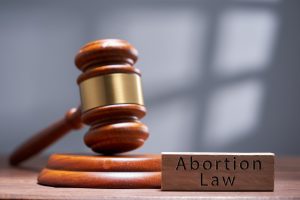

This essay will provide an in depth look at the abortion laws in Pakistan, as well as consider the role that religious doctrine and woman's human rights play in their existence. Pakistani abortion laws were influenced by Islamic theology which gave rise to severe limitations, as defined in the Pakistan Penal Code (PPC). This article will discuss these laws and how they've been interpreted by the Pakistani courts, as well as explore the balance between women's rights to reproductive autonomy and the need to protect potential fetuses.
Special attention will be given to legal protections provided for pregnant women raped while incarcerated, and this essay will explore the context within general human rights law and Pakistan's commitment to CEDAW.
The article will point out existing gaps in these laws especially as regards 'necessary treatment,' and the lack of consistent judicial precedent on abortion in Pakistan. This essay argues that, while respects remain necessary for religious values, it is essential to create a system where the Constitution and woman's human rights, specifically dignity and privacy, is put above religious prohibition.
Key words PPC, CEDAW, Abortion, Rape, Jurisprudence
The topic of abortion is currently one of the most controversial issues that face Pakistan, the issue itself involves the complexities of religious thought, morality, human rights and the law. To define abortion in simple terms: it is the removal of a human fetus or embryo from a pregnant woman. Such removal may occur in various settings and under many circumstances, and a recent U.N report concluded that the majority of countries that prohibit abortion only permit abortion when the mother's life is in danger.
Islamic jurists generally hold that abortion is forbidden, considering it equivalent to taking a life, and within the vast context of Islamic jurisprudence, this remains the position in Pakistan. In Pakistan abortion is considered an offense according to the PPC, which designates the act as isqat-i-haml (if at any stage before organogenesis) or isqat-i-janin (if after organs have developed) and uses a variety of methods including the prohibition of termination except under narrow circumstances.
These laws affect millions of women in Pakistan as it is difficult for them to access the legal definition of abortion, and thereby its legality in their case in many instances.
The legislation affecting the interpretation of abortion in Pakistan comes directly from the PPC, specifically Sections 338 through 338C as amended in 1990:
Section 338 states: " whoever causes a woman with child whose organs have not been formed to miscarry unless in good faith to save her life or provide necessary treatment, is said to cause isqat-i-haml and shall be punished with imprisonment...." This section applies to the women herself who attempts to miscarry on their own also the punishment listed in Section 338A provides that the punishment will be a maximum of three years with imprisonment where done with her consent; and up to 10 years if done without consent. The punishment is elevated with addition of liability for causing injury or death. The only allowance for when it is okay to take any such action is listed in sections 338B and 338C respectively where the mother's life is said to be in danger, which then constitutes isqat-i-janin which can be punished by diyat or imprisonment if death does not result, and still more severe punishment is received if death does occur.These sections correspond to Islamic jurisprudence that makes abortion a forbidden act after conception is complete until 120 days (which many take as the point of ensoulment) when termination of the pregnancy will not carry punishment except if the woman's life is not in danger. However, the problem with the above statutes is that they contain some ambiguities; the crucial ambiguity lies within the definition of "necessary treatment" as women who desire an abortion do not clearly know when they are justified in having their pregnancy terminated, the issue of rape in particular is a contentious part of that answer, and no provision of the statute in Pakistan considers abortion with regards to the fetuses health.
Since the debate of whether women should be allowed to terminate a pregnancy within 120 days goes against the fundamental ideals of Islam within Pakistan, it would be helpful to examine the various opinions in wider Islamic doctrine concerning abortion when there is rape. There are a wide array of rulings made by religious scholars regarding abortion under differing circumstances, such as the decision made by the Mufti of Egypt, Muhammad Sayyid Tantawi in 1998, when he issued a fatwa allowing rape victims to undergo abortions even if more than 120 days into their pregnancy, if a determination is made that a termination would be best for the victim. The National Council for Islamic Religious Affairs of Malaysia did similarly in 2002 issuing a similar fatwa as to the limits on abortion for rape victims during the first 120 days of a woman's pregnancy. In Syria, there is ruling that allows women who have been raped to seek a termination after four months due to trauma from the act. These rulings indicate that jurists throughout Islam realize that in some limited instances, the negative impacts to a woman's life and well-being may necessitate taking the life of an unborn child. Pakistan may take cues from this in deciding whether to pursue their own similar fatwas in the law.
Beyond the realms of religious law, the Constitution of Pakistan guarantees numerous rights to women, such as Article 9 protecting life and liberty, Article 14 on dignity and privacy and Article 25 of the Constitution. Women are guaranteed equality of treatment under the law.However when this applies to the topic of abortion, it does so in an ironic way because the aforementioned sections of the PPC makes abortion an illegal act to protect the lives and dignity of women from themselves, while CEDAW has been ratified in Pakistan and supports the notion of reproductive health for women as a basic human right. According to General Recommendation No. 19, each state is urged to implement policies and laws that remove discriminatory practices against women and protect women from unsafe abortions which are often a result of ineffective reproductive services.
Pakistani laws, at present, are far from this.
A liberal interpretation of the rights guaranteed in the Constitution may well support the abortion rights of women and provide precedent to protect the lives and dignity of women from things like sexual assault, or to avoid giving birth to a child with a serious defect.
Rape is one issue that has generated much contention in many different areas of life and in many cultures, especially in countries that uphold Islamic law. Despite juristic support for allowing abortion in cases of rape within the first 120 days of pregnancy, there are still numerous issues regarding the law in Pakistan. The issue goes back to the same problem within the PPC: a lack of clearly stated statute to prevent pregnancy in cases of rape and subsequently, a fear on the part of Pakistani medical practitioners to perform abortions on rape victims out of worry that they will be punished.
This fear is coupled with women fearing the trauma and stigma of a pregnancy resulting from sexual assault.The statement "When two evils meet, the lesser should be sacrificed for the greater" is an important part of juristic opinion on how to interpret the situation of a woman in this predicament.
Therefore, terminating a pregnancy arising from rape is viewed as the lesser of two evils where continued carrying the pregnancy may result in increased despair for the woman due to her violation. It seems clear that women who are victims of rape need legal protections to ensure their well-being is the foremost priority; the current stance of Pakistani law which fails to provide it denies women the basic right to have their lives be as decent as possible and often results in unsafe abortions.
There have been a minimal number of cases in the Pakistani courts regarding abortion law, but what evidence there is indicates that they have only permitted abortion in cases that risk the women's life, never any others that the argument of 'necessary treatment' covers.However, there remain ambiguities regarding whether those other circumstances could count toward necessary treatment. Cases of rape and extreme deformities of the child born could very likely bring about mental health struggles for the woman, thereby justifying an abortion to a liberal perspective of law and human rights, if not a liberal perspective on an issue tied into religion like abortion.Judicial decisions have long avoided definitive rulings on what necessary treatment signifies thus it must be addressed through either additional legislation or more Supreme Court interpretations of the laws currently in effect so that medical doctors will know if they have grounds to offer medical treatment on behalf of women seeking an abortion.
In conclusion, the laws of Pakistan surrounding abortion are based in Islam but they lack clear legislation and interpretation regarding women's rights to have access to legal and safe abortions. Juristic views of the Muslim world combined with a broad understanding of the constitution of Pakistan can support the fact that when women are victims of rape, abortions should be legalized and allowed within the first 120 days, without penalty. Legal reform must be enacted to address the gaps in statutes, specifically expanding 'necessary treatment' to include mental and physical health, and allowing for abortions in instances of rape as well as those where serious fetal abnormalities are discovered. With such amendments, the law in Pakistan would be more closely in line with the global notion that a woman's right to human dignity and self determination and bodily autonomy is paramount, in addition to supporting Islamic principles of mitigating suffering where possible.