

Introduction:
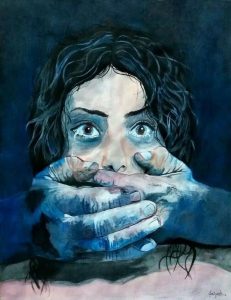
Imagine for a second what if the devil was sent down to earth in the form of a human being. what form would he take? Maybe, in the form of an animal, who will consider himself a “man” through treading upon the breath of an innocent and unaware person. In the society we live in and in the country we live in, each new day and every rising sun heralds a new tale of heart-breaking news for us. Whether it is newspaper page or social media updates or headline of news channels, news of rape and sexual assault becomes a routine matter. The worse thing is that this terror is not only limited to adults anymore, but the young girls and children, as innocent as flowers, have also started being continuously attacked.
The causes of sexual violence:
What has driven our new generation, especially our youth, towards this madness and this disturbing behaviour? If we look into the science of human behavior and mental state, we find that the widespread availability of pornographic content on the internet has caused maximum harm to the social values that have given rise to sexual lust, desire for domination and excitement in minds. First, the slow pace of the justice system and delay in punishing the criminals has entirely eliminated the fear of the law from the heart of the criminal, whereas, the misconception of masculinity makes criminals to commit sexual crime not for lust but to assert power and control.
Statistics of Sexual Violence in Pakistan:
But what are the actual figures of rape cases in Pakistan? The actual scenario is that the cases that are reported represent only a fraction of the entire problem. According to official and international statistics, there are about 1,000 cases that are commonly reported in Pakistan each year, although according to experts, the actual figure is actually 10 times higher, because of fear and stigma. There was a shocking increase of 30% in the cases of rape reported to the police in Pakistan between 2018 and 2022, when 3,000 cases were registered in 2018, 3,800 in 2020 and 4,200 in 2021. The issue of sexual assault continues to be a major problem in Pakistan. As per the statistics provided by Sahil from January to June 2026, there were 280 cases of rape reported in Pakistan and a total of 3,172 cases of sexual and gender-based violence were reported. As per Punjab Police statistics, 4,446 cases of rape and 940 cases of gang rape were registered in Punjab only in the first six months of 2026. In addition, there were 8,553 cases of rape reported in Punjab in 2025.
It has been conservatively estimated that 1 in every 10 women faces sexual violence at least once in her lifetime in Pakistan, while 95 percent of victims refrain from approaching legal authorities due to social pressures.
Demographic profile of victims and perpetrators:
The notion that violence takes place in one particular class of people is simply wrong; if we consider the victimization rate along with the perpetartors, the statistics tell us some shocking realities about them. More than 60 percent of the total number of cases are comprised of individuals under the age of 18, out of which 35 percent are mere minors and 15 percent are less than 10 years old. Among all victims of sexual violence, 70 percent are women and girls, while 30 percent are boys and transgender individuals. Around 55 percent of the total victims belong to poor families and around 42 to 80 percent of the total cases take place in rural areas where there is absolutely no resource available. Moreover, 30 percent of the total victims have physical or mental disability while 40 percent of them belong to religious minorities. As for the prepetartors, 85 percent of them are males aged 20-40 while the most tragic thing is that 40 percent of the total cases are committed by relatives or acquaintances.
Judicial failure and conviction rates:
Despite all these laws, why are the criminals free and why is the conviction rate so low? Despite all the existing laws such as the Pakistan Penal Code (PPC) and the Anti-Rape Ordinance of 2020, the judicial system appears to be completely paralyzed. 35% of the cases take more than 5 to 7 years to be adjudicated in court, and the conviction rate in cases of rape in Pakistan is only 5% to 8% which is the lowest in all of South Asia. The average sentence in the rest of the world is 12 years, while the average sentence for criminals in Pakistan is only 7 years. Because of lack of evidence and intimidation of witnesses, 60% of the listed criminals may escape prosecution or conviction. 40% of the accused get bail within 24 hours of their arrests, and 25% of the convicted criminals are released from prison in one year through parole. Because of this weakness of the legal system, 50% of the criminals continue to commit this evil practice. It may rather not be wrong to say that criminals commit these crimes without any fear of the law.
What are the major legal loopholes that hinder justice?
According to the traditional laws of evidence, 30% of criminals get an escape route from justice through the questions regarding ‘character’ of the victim in the court. Alternatively, through the loopholes of the law, there is an easy escape from harsh punishments for the crime by marrying the victim. Meanwhile, the legal protection against marital rape leaves a huge question mark over the rights of women. Witness protection laws are insufficient as a result of which 90% of witnesses retract their statements out of fear. The legal age of consent is 16 years, however, the law also covers the individuals below the age of 18 years in case of rape. The gap between the two ages leads to misunderstanding of the law and investigation of the case.
Severity of Violence, Murder and Location:
The acts of sexual violence that have come to light recently are not only criminal acts, but the highest form of inhuman cruelty. And along with this comes the use of a human body that is then disposed of after being murdered. However, the real issue here is that what makes the nature of the acts so horrifying, and why are acts of rape and murder taking place? The acts of crime are so intense and soul-shattering that they shock the very core of humans; not only do they use physical violence against the victims, but also cause permanent injuries inside and outside. To conceal their crime and avoid identification, prepetartors often mutilate or destroy the victim’s body a crime against humanity in itself. It can be seen from the facts of investigation reports that more than 60% of the cases in which the objective was to destroy evidence of so-called honor and identity were committed by the family members or close relatives of the victim. The situation is so alarming that 70% of the women and girls are unsafe at home, 25% in public places, and 5% while traveling.
Medical and Forensic Facilities Crisis:
Proper medical examination and DNA collection is crucially important to establish guilt in any crime case, but what is the condition of the medical and forensic facilities in our country? There are only 0.16 hospitals per 1 million population in Pakistan that have the necessary facilities for treating rape victims, according to the World Health Organization. 45% of the total hospitals in Pakistan lack the essential ‘rape kits’ because of which the collection of physical and legal evidence becomes impossible. Due to the lack of such facilities, 80% of victims are unable to receive medical aid within the first 24 hours, not only putting their life at stake but increasing the risks of sexually transmitted infections as well as unwanted pregnancies. There are only 32 recognized crisis centers in Pakistan assisting just 12% of the total population, while 88% of population remains helpless in this regard.
Impact on the psychological state and social boycott:
What is the impact of the social indifference and attitudes towards the victim of the crime when she is before the legal courts? 85 percent of victims of sexual violence experience serious PTSD, 90 percent of victims experience depression, while 30 percent become suicidal. In the urban area, 90 percent of the victims cannot seek justice due to fear of social stigma and defamation. The data from the human rights report says that 25 percent of victims have been thrown out of their houses by their own family members so that their name is not dirtied in society, while more than 50 percent of the victims face social hatred, boycott, and prejudice in their respective localities, making it difficult for them to lead their lives.
Lack of Information and Financial Aid:
Once the individual endures such a traumatic event then he has no idea who to turn to and why does such a situation prevail regarding the lack of information? As per an all-inclusive study, 90% of the victims are unaware of the fact that there is any support service or hotline facility available for them in the country. 10% of the victims receive legal aid, and there are merely 100 professional lawyers available in the whole nation for dealing with cases of rape. Coming to the financial side, 95% of the relief funds available in Pakistan rely on foreign assistance. Whereas less than 0.5% of the budget of the country is reserved for this critical issue.
Proposed plan and reformations required from legal/administrative point of view:
Then what drastic actions are required to tackle this grave crisis and rising barbarism? This never-ending phenomenon of sexual violence in Pakistan cannot be tackled merely through words on paper. However, it is high time that revolutionary actions are taken on legal, administrative and social fronts. First of all, cases must not be kept pending for long durations of time; rather, special courts be set up in each district to announce the decision of the case in 50 to 60 days. Through the modernization of the investigative process, the use of DNA and medical samples should be made compulsory within 24 hours of the crime and legal action should be taken against the respective policeman in case of destruction of the evidence. There should be a complete prohibition on the victim’s past or character being questioned during the court process to block the way of acquittal of criminals through victim blaming and clauses reducing punishment based on the pretension of agreement or marriage must be completely eradicated from the law. From the start of the trial till the verdict is announced, both the victims and witnesses should be granted complete protection by the state and financial assistance so that no influential criminal can exert pressure on them. Moreover, there must be complete assurance of treatment facilities and free evidence collection kits in all government district hospitals and there should be establishments of psychological rehabilitation centers. The children at school, college and madrasa level should be educated about body boundaries and safety and strict measures should be adopted to control access to online pornographic content and cybercrimes.
Immediate actions of the government and judicial system:
What are the immediate actions that need to be taken by the government and judiciary in all these circumstances? The government has to come out of its verbal commitments and move on to concrete steps now. There has to be an increased presence of female investigation officials in the police force so that the victims can make complaints without hesitation. There needs to be a 24 hours national helpline which would be directly connected to the rescue, medical help and legal agencies. The judicial system should revoke bails that have been given in such cases and make sure that the punishment of the influential persons is carried out immediately and without fail.
Conclusion:
If as a society we keep silent today and fail to mend these rifts in laws and justice, then tomorrow some other innocent person becomes the victim of such atrocities. The real strength of a nation does not lie in its tall buildings or economic achievements, but in the safety of its women, children, and other vulnerable sections. The requirement of the hour is that we, as a nation, lawmakers and as citizens join hands to combat this evil, so that our future generations grow up not in an atmosphere of fear but in the atmosphere of dignity, respect and total security.